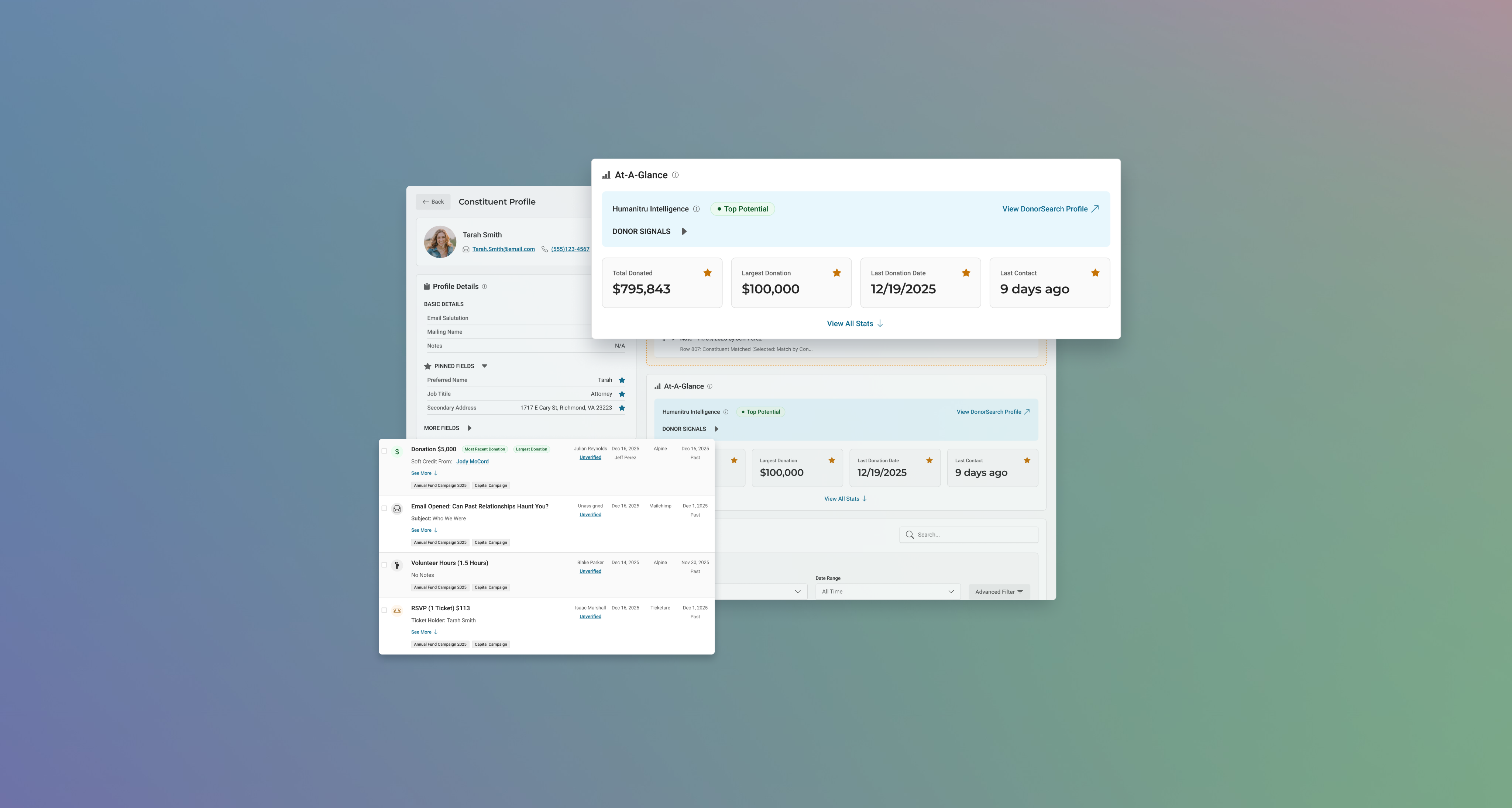
My Contribution
I evaluated Array’s vendor experience, identified usability and accessibility issues, and designed the first-time enrollment flow. I shared our team’s style guide with Array to guide accessibility corrections and closer alignment with our banking platform, while working with internal stakeholders to clarify requirements and prioritize improvements.
The Challenge:
Improving an Experience We Didn’t Fully Control
Our banking platform was integrating Credit Insights through Array, a third-party provider. Formal product requirements had not yet been established, information about customer needs was limited, and the team was still evaluating API and iframe integration options.
Because Array controlled much of the interface, I needed to identify where our team could influence the customer experience.
I focused on three priorities:
- Accessibility: Identify barriers and recommend corrections before release.
- Enrollment: Define how first-time customers would enter and activate Credit Insights.
- Consistency: Reduce differences between the banking platform and the vendor experience.
Turning Audit Findings Into Actionable Guidance
I reviewed Array’s prototype and met with stakeholders to understand the proposed integration and its constraints.
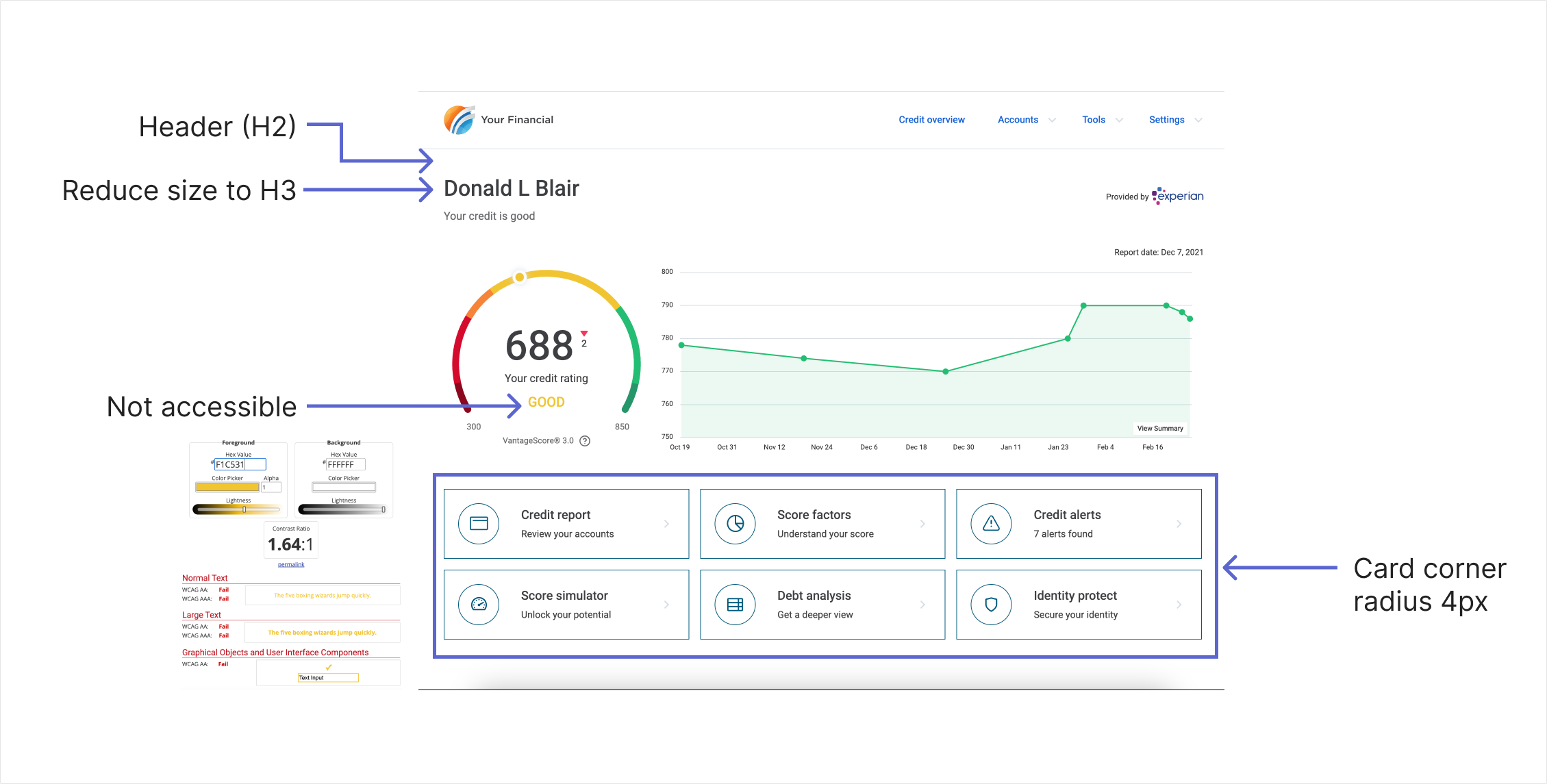
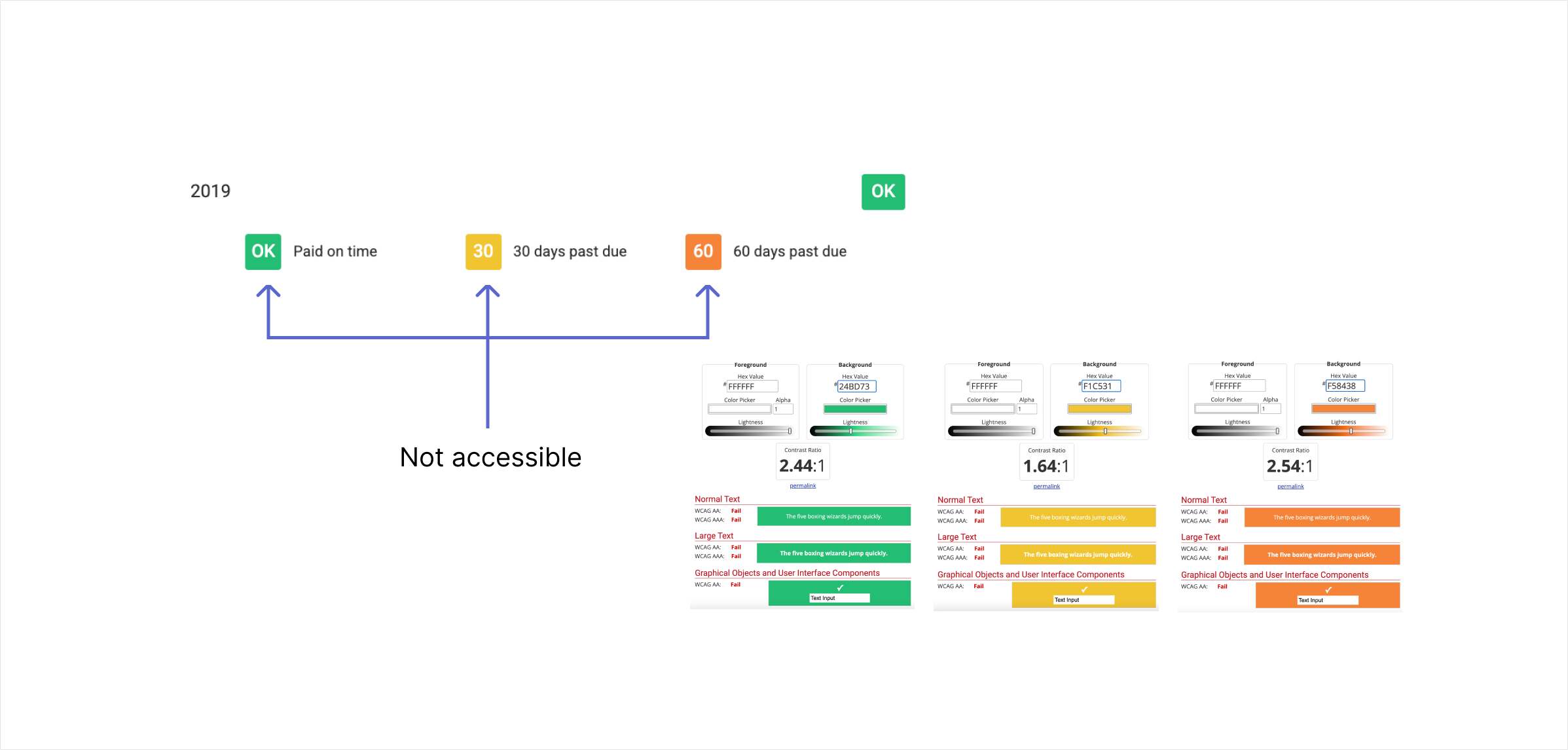
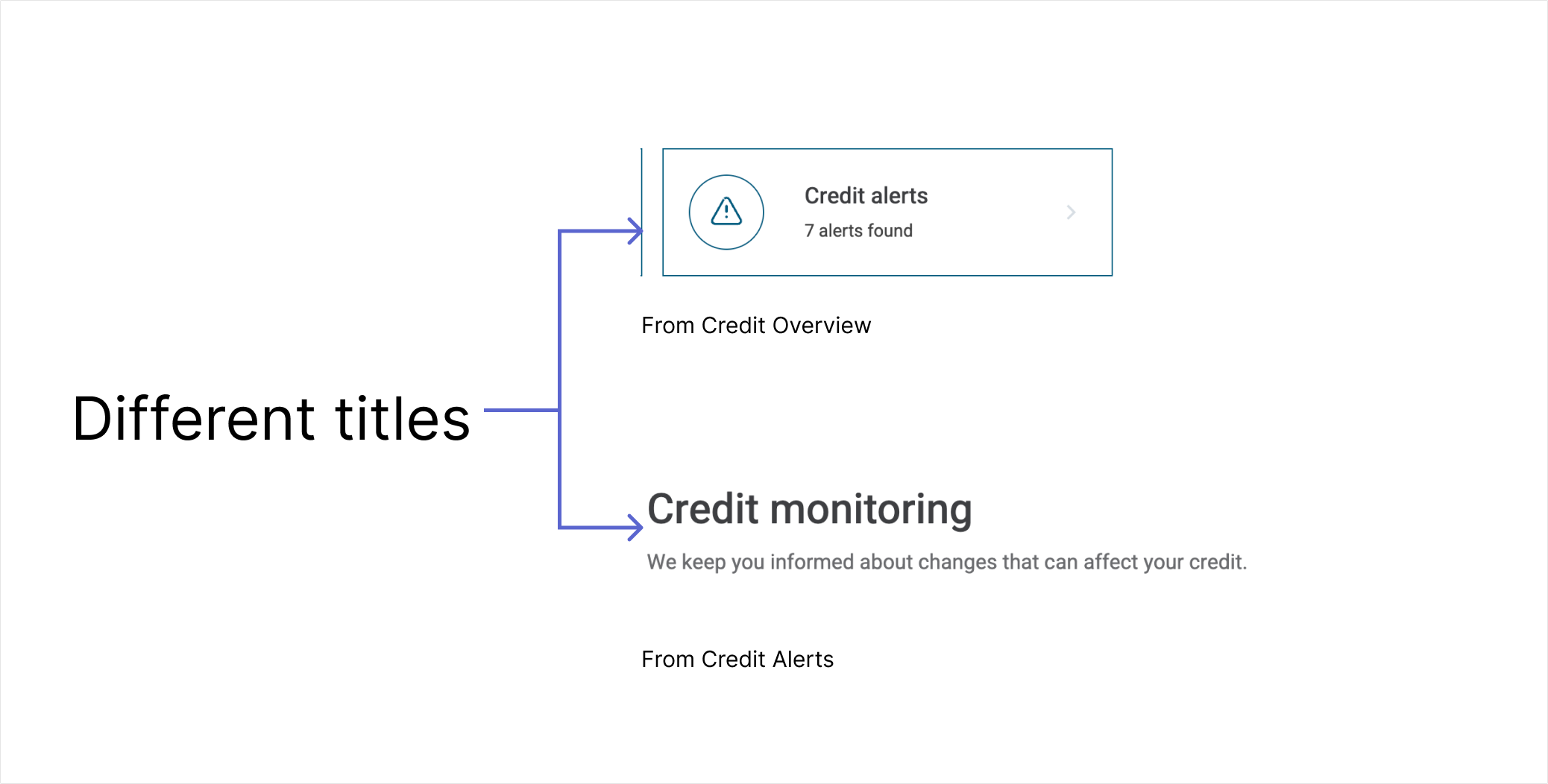
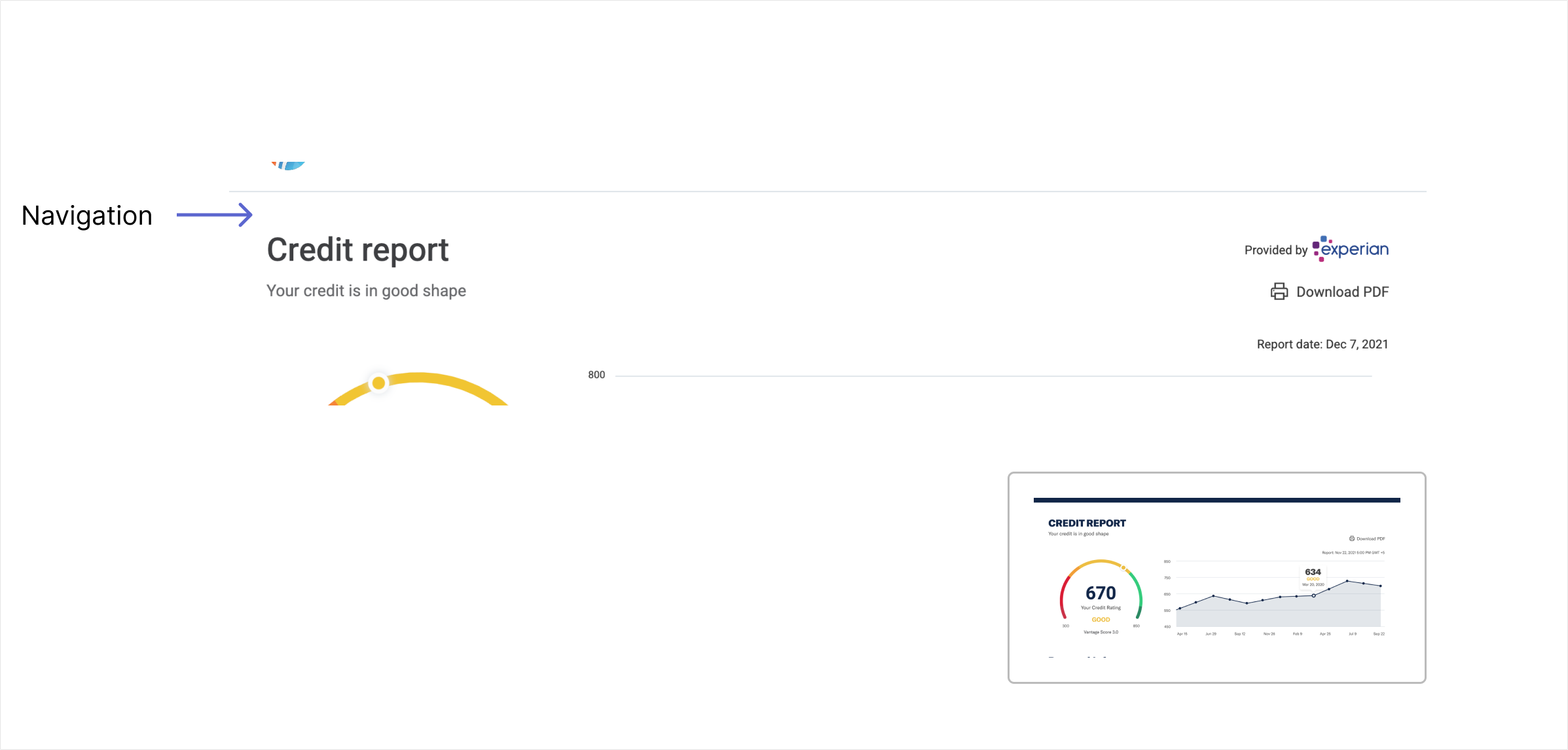
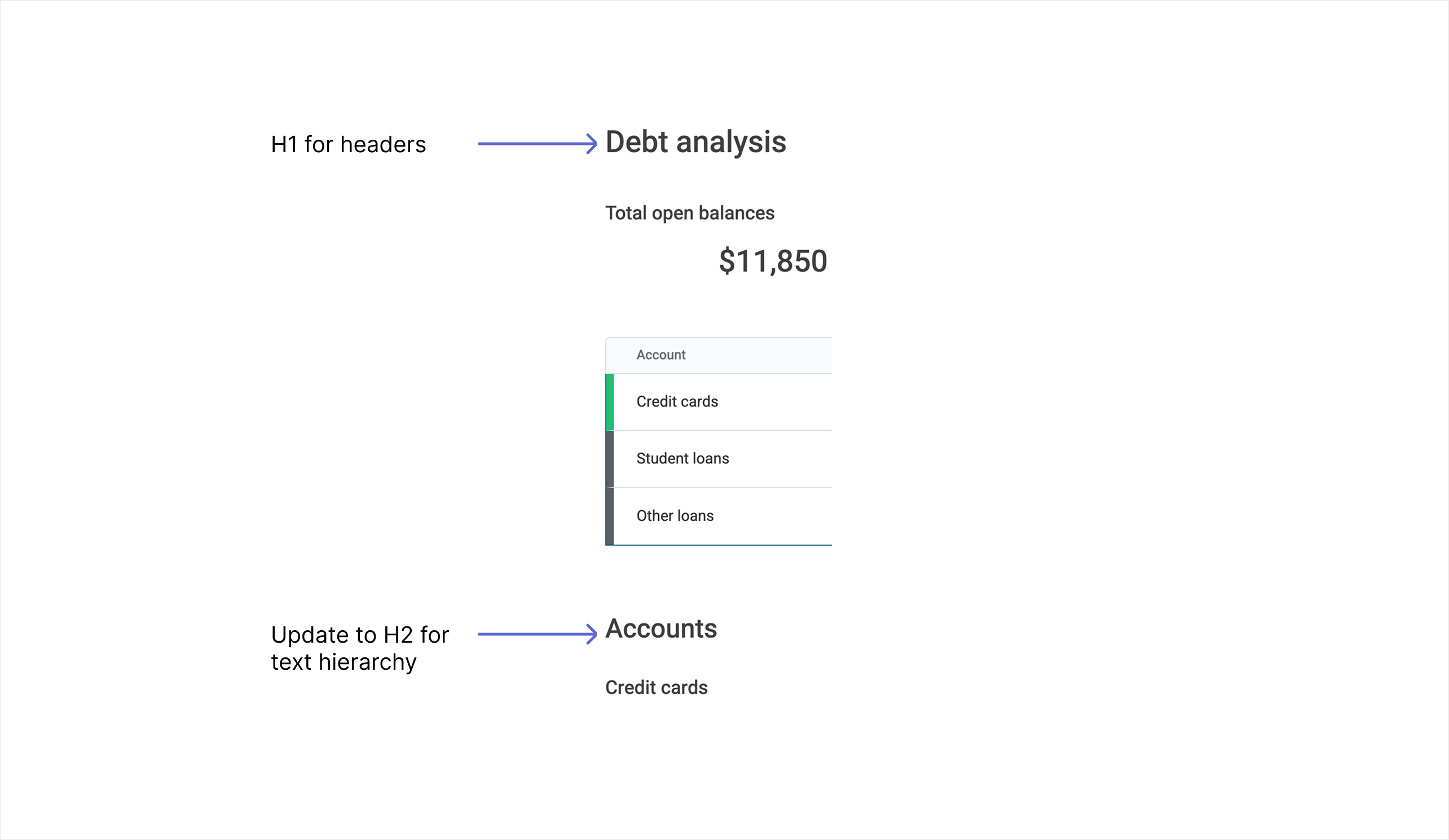
The review identified color combinations that did not meet WCAG AA contrast requirements, inconsistent information hierarchy, and navigation and interaction patterns that differed from our platform.
Alongside documenting the issues, I provided Array with our team’s style guide. This gave the vendor established styles to follow when correcting the identified accessibility issues and aligning the interface with our product.
Initial audit findings
Defining Enrollment While Requirements Were Evolving
The enrollment experience depended on decisions that were still unresolved:
- What information would customers need to enter?
- What could the bank pre-populate?
- How would the experience communicate that enrollment was processing?
- How would customers move between the summary and the full experience?
I mapped a first-time enrollment flow and translated it into initial screens using our design system.
The flow made those unanswered questions visible. It gave stakeholders a concrete experience to review and helped clarify requirements while the technical approach was still taking shape.
Reviewing the Integrated Vendor Experience
Once Credit Insights became available in our environment, I conducted another UX and accessibility review. Seeing the vendor experience inside our banking platform revealed issues that were not apparent in the initial prototype.
I documented the findings and worked with our internal team and Array to prioritize corrections. Array used our style guide to address the identified accessibility issues.
My review did not extend to the implemented enrollment flow. Although it shipped, I did not have the opportunity to audit it, so I cannot confirm how closely its final implementation matched the design.
Integration review and recommendations
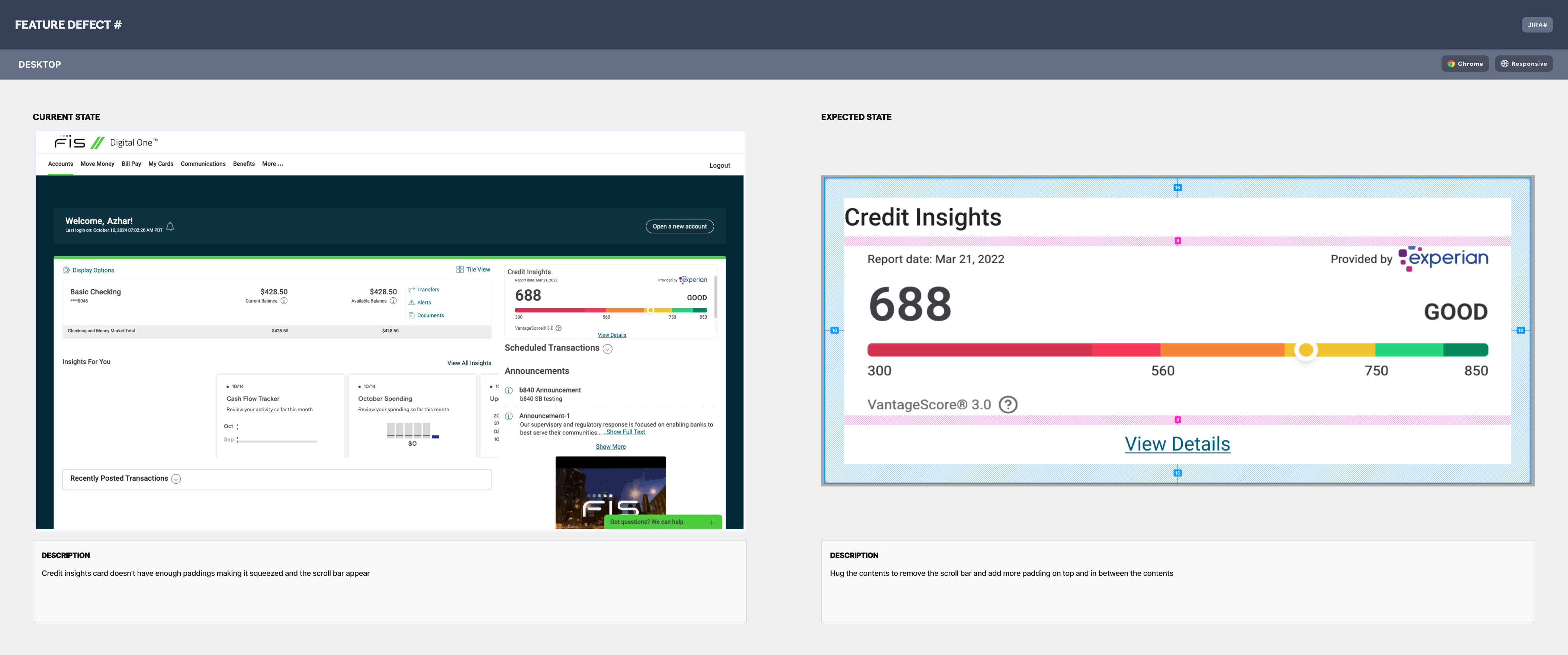
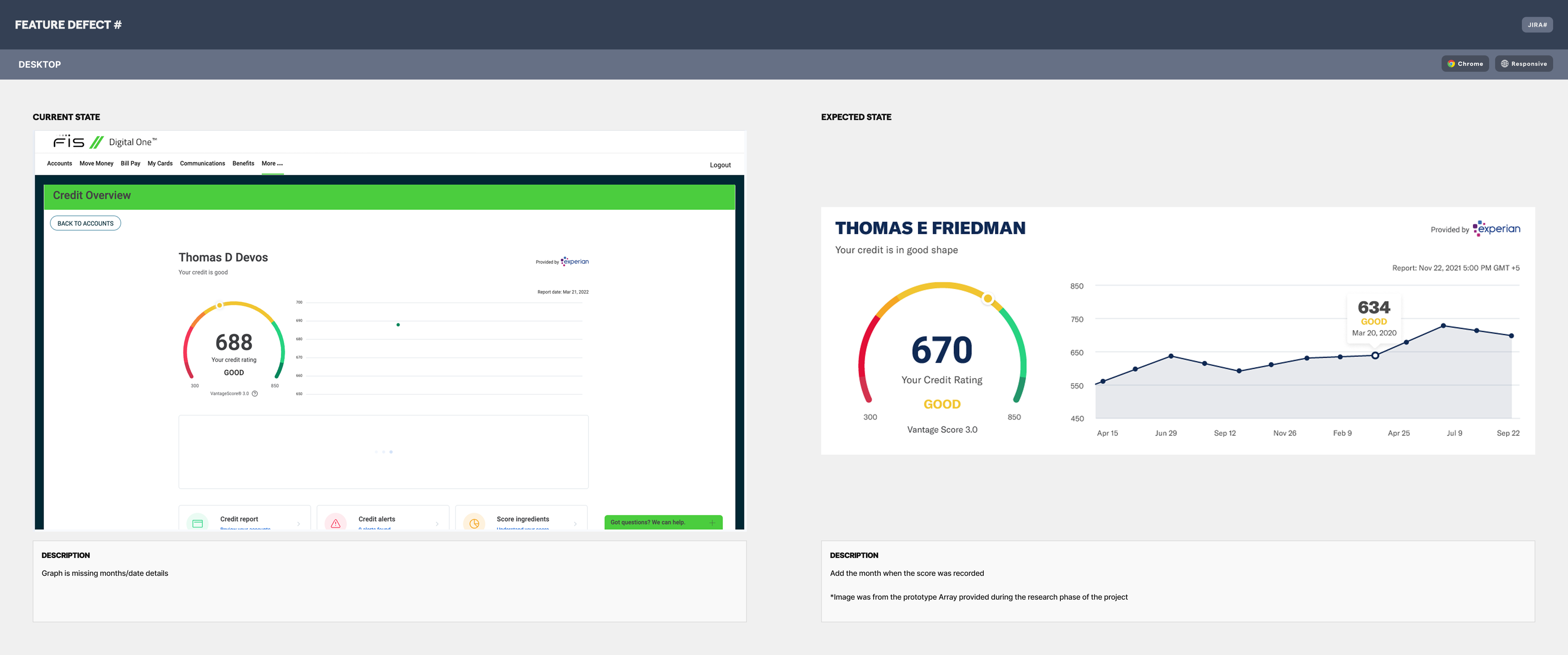
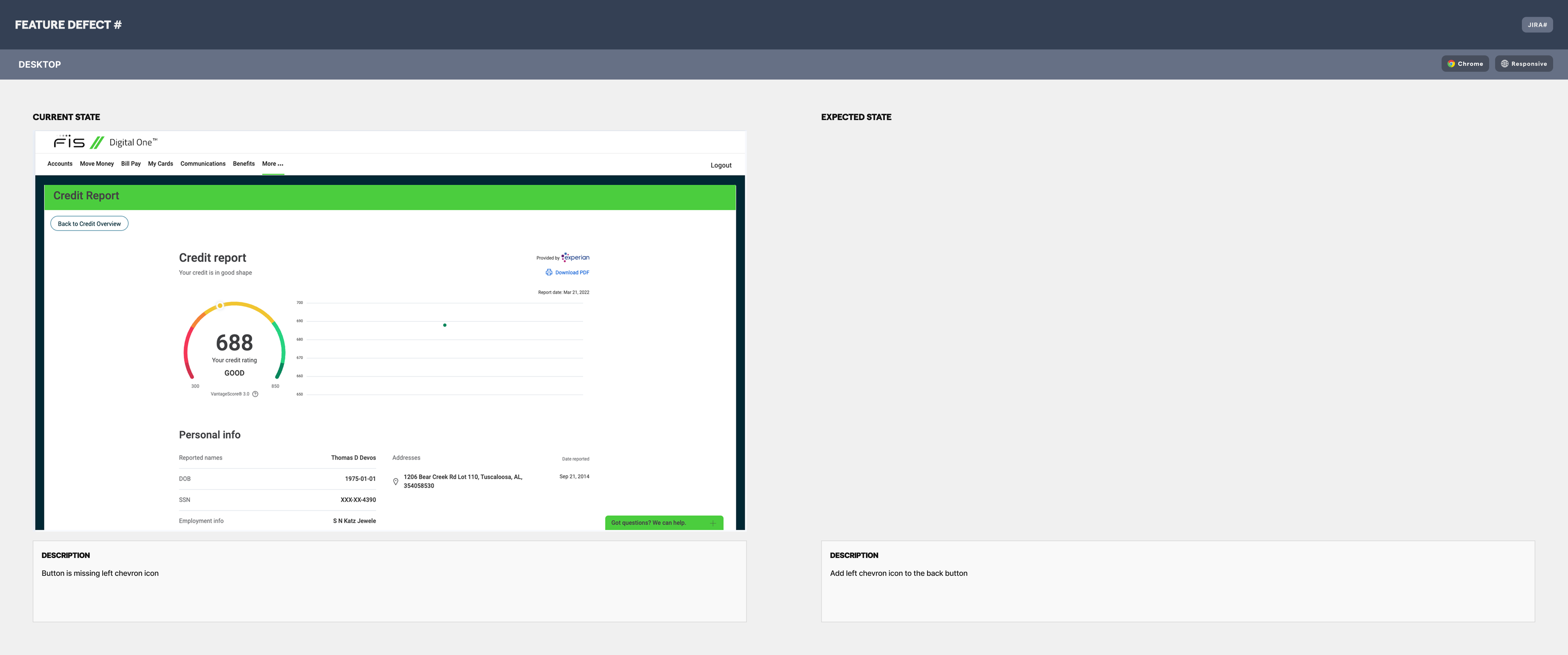
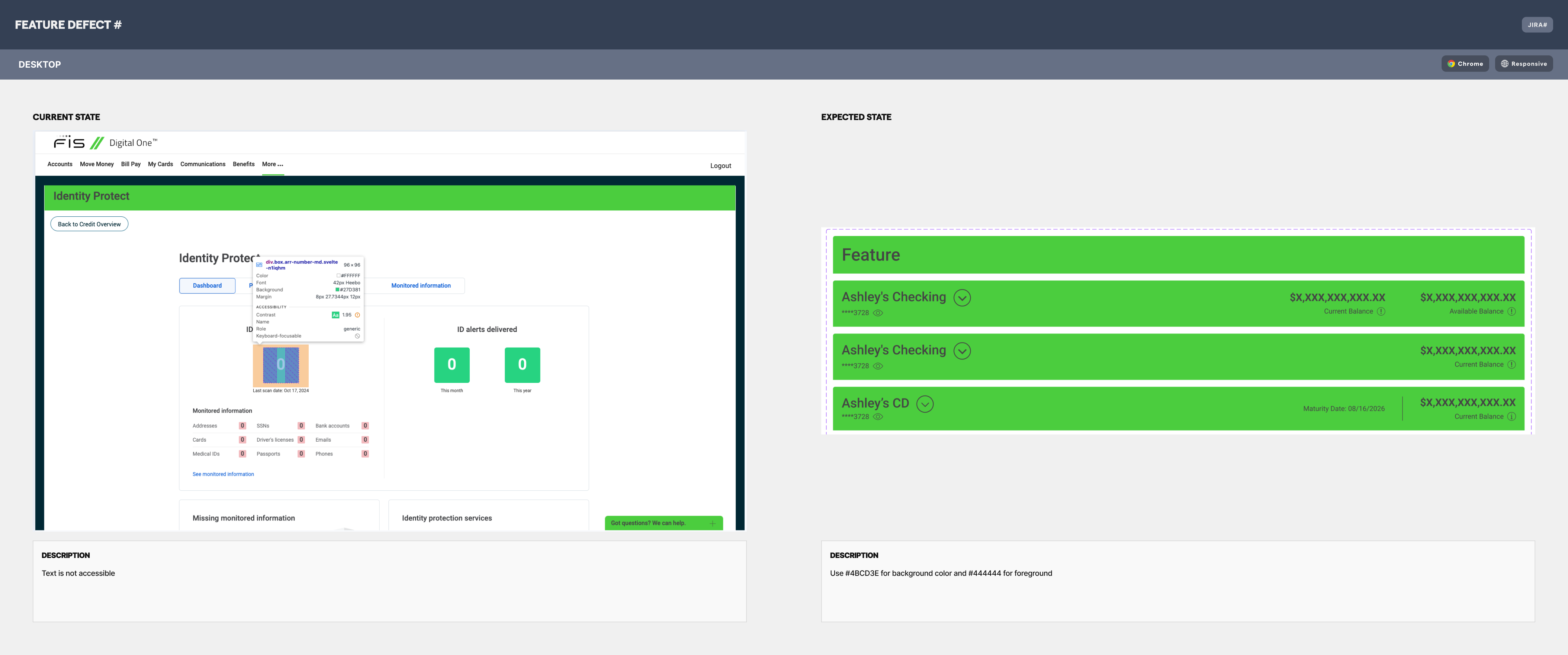
These audit records compare the observed experience with recommended changes, rather than verified before-and-after results.
What Changed
Identified accessibility issues were addressed
Sharing our style guide gave Array concrete direction for correcting the issues surfaced through the reviews.
The enrollment flow shipped
My flow and screen designs helped clarify the first-time experience and supported its delivery. Post-implementation validation remained a gap.
The vendor received clear guidance for consistency
The audit and style guide established a shared reference for aligning the experience with our banking platform, within the customization limits of the final iframe integration.
What I Learned
This project taught me to distinguish between what I could design directly, what required vendor collaboration, and what the integration constrained.
Pairing audit findings with an established style guide made the recommendations easier for the vendor to act on. Designing the enrollment flow also helped the team resolve uncertainty before every requirement was defined.
The project reinforced the importance of planning implementation reviews early—particularly when delivery spans internal teams and an external vendor.