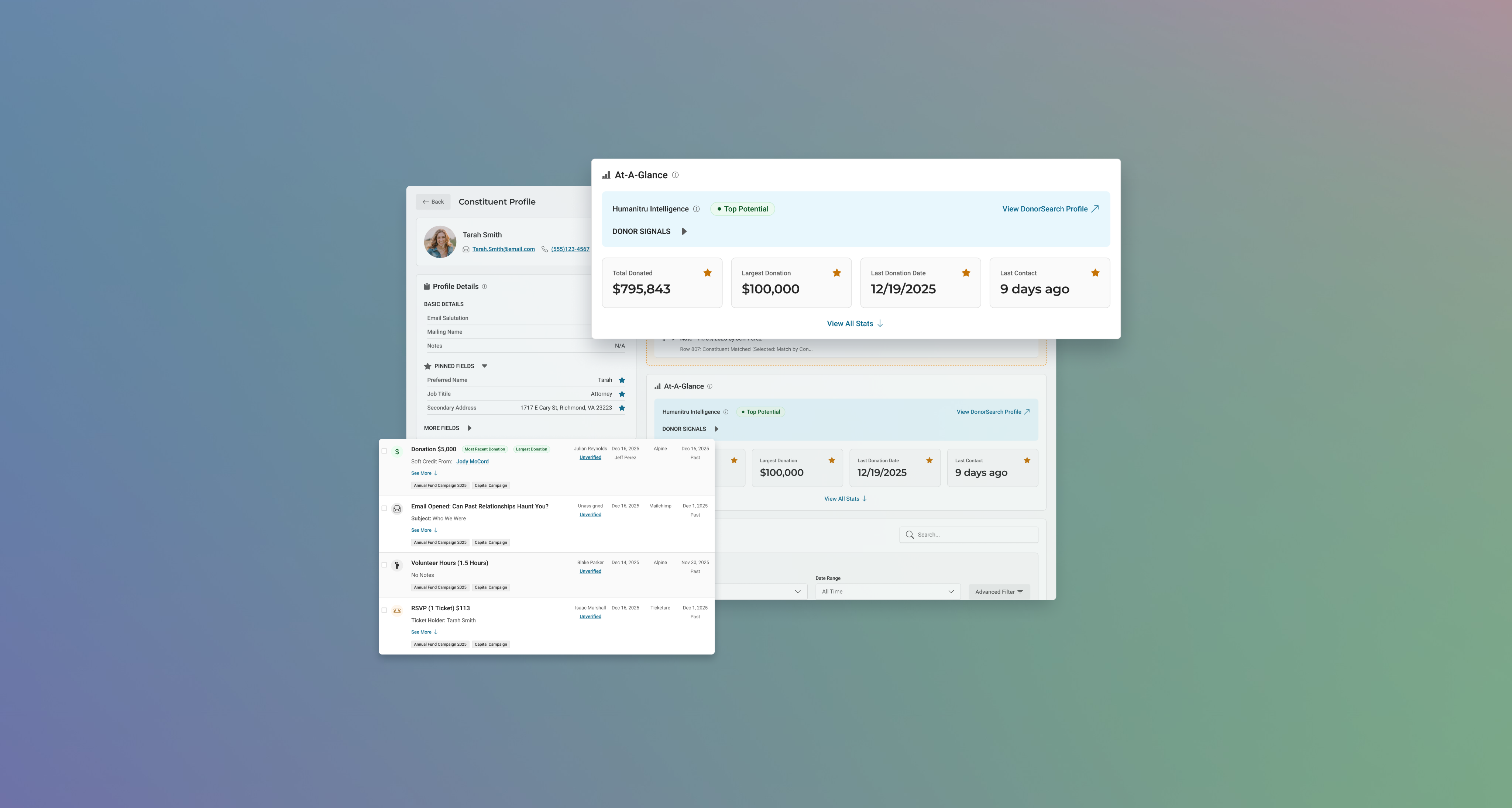
The Opportunity Behind Opportunities
My Contribution
I led discovery, customer interviews, workflow mapping, and interface design. I partnered with Product, Engineering, Customer Success, and leadership, and participated in usability testing and iterative validation.
The Challenge: Fundraising work lived outside the CRM
Humanitru supported constituent management, but lacked a dedicated fundraising pipeline experience. Teams tracked donor opportunities across spreadsheets and external tools, separating fundraising activity from donor context.
Gift officers needed to manage prospects and follow-ups. Development directors needed visibility into pipeline health, expected revenue, and team progress.
The goal was to bring these needs into a connected workflow within Humanitru.
Research Pointed To Next Steps, Not Just Records
Through customer interviews, stakeholder conversations, and competitive analysis, I identified three priorities:
- Support familiar workflows. Teams already managed opportunities. The experience needed to bring that work into Humanitru.
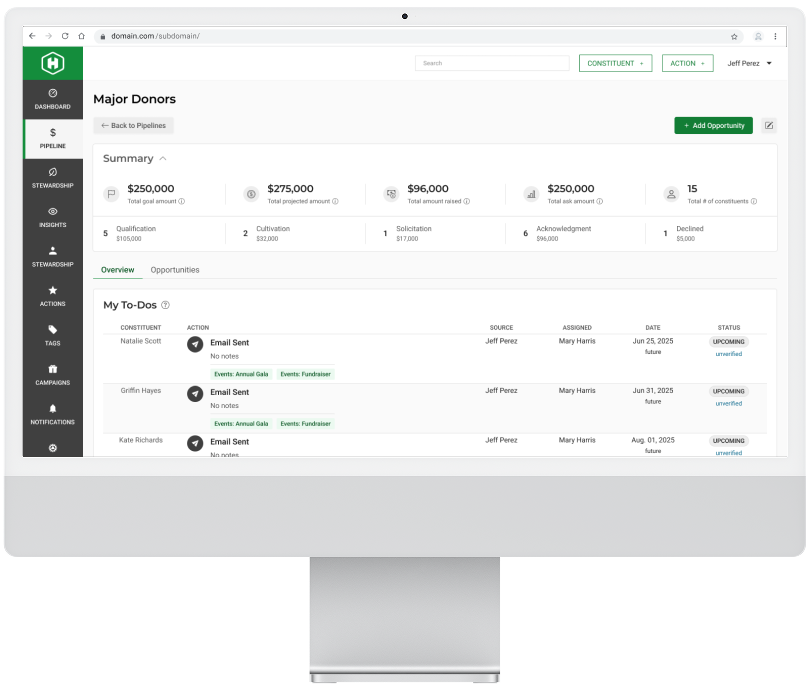
- Make follow-up actionable. Fundraisers wanted to know what was due next.
- Support different levels of visibility. Individual fundraisers needed donor details and tasks, while leadership needed an overview of fundraising progress.
These insights shaped the pipeline structure, opportunity actions, and summary information.
A Shared Structure for Managing Opportunities
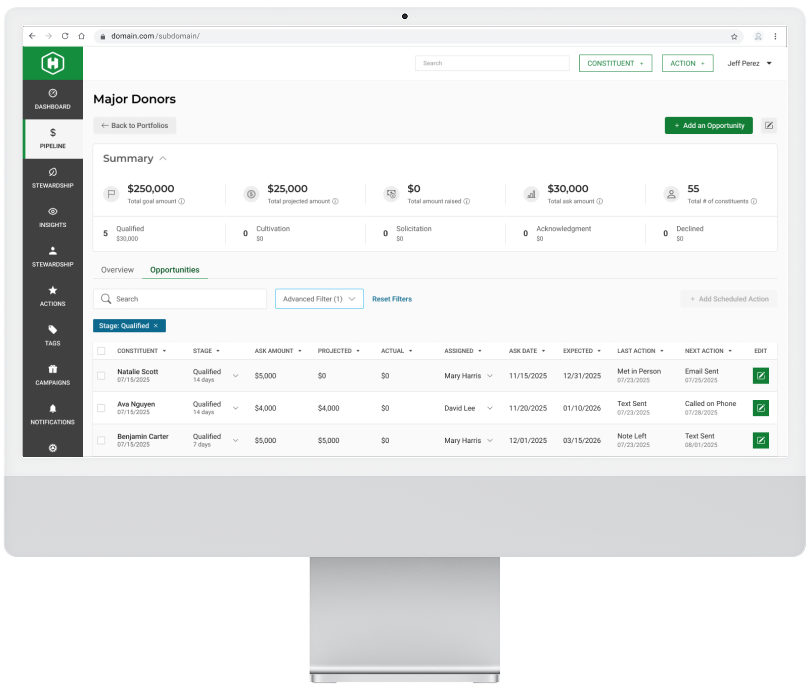
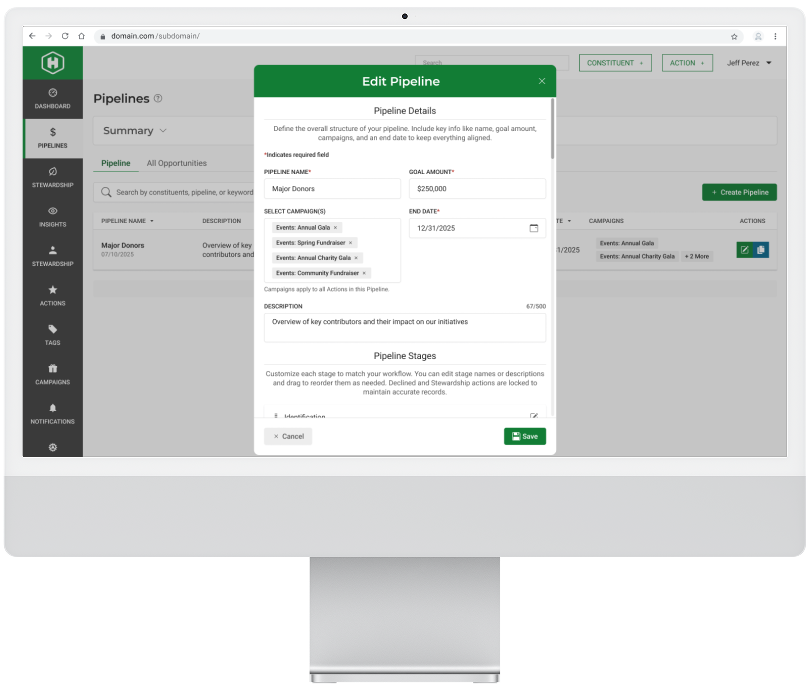
I worked with stakeholders to map the donor journey and define opportunity stages. The design brought stage, ownership, amounts, dates, and next steps into one experience.
Related actions and constituent information connected each opportunity to the ongoing donor relationship.
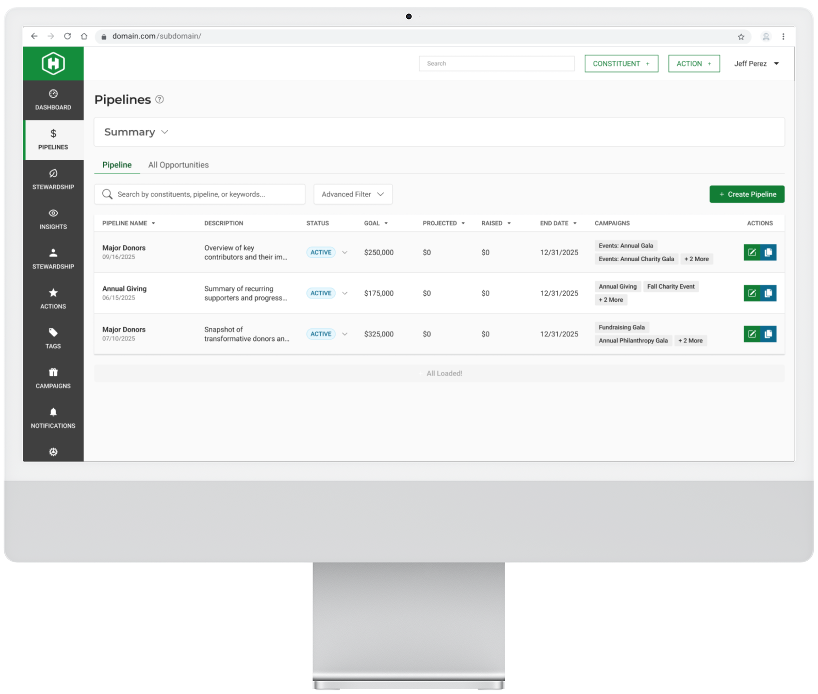
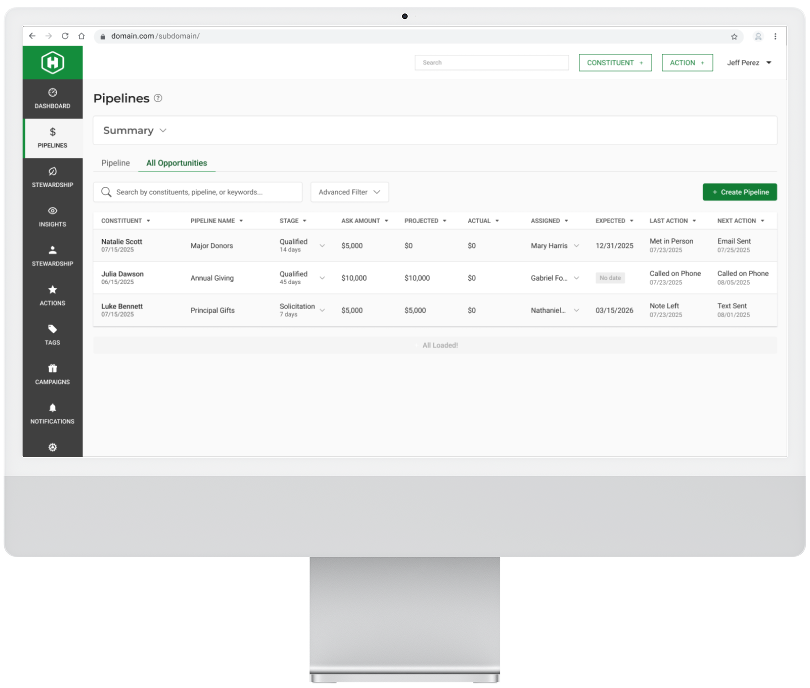
User Feedback Clarified Three Different Financial Values
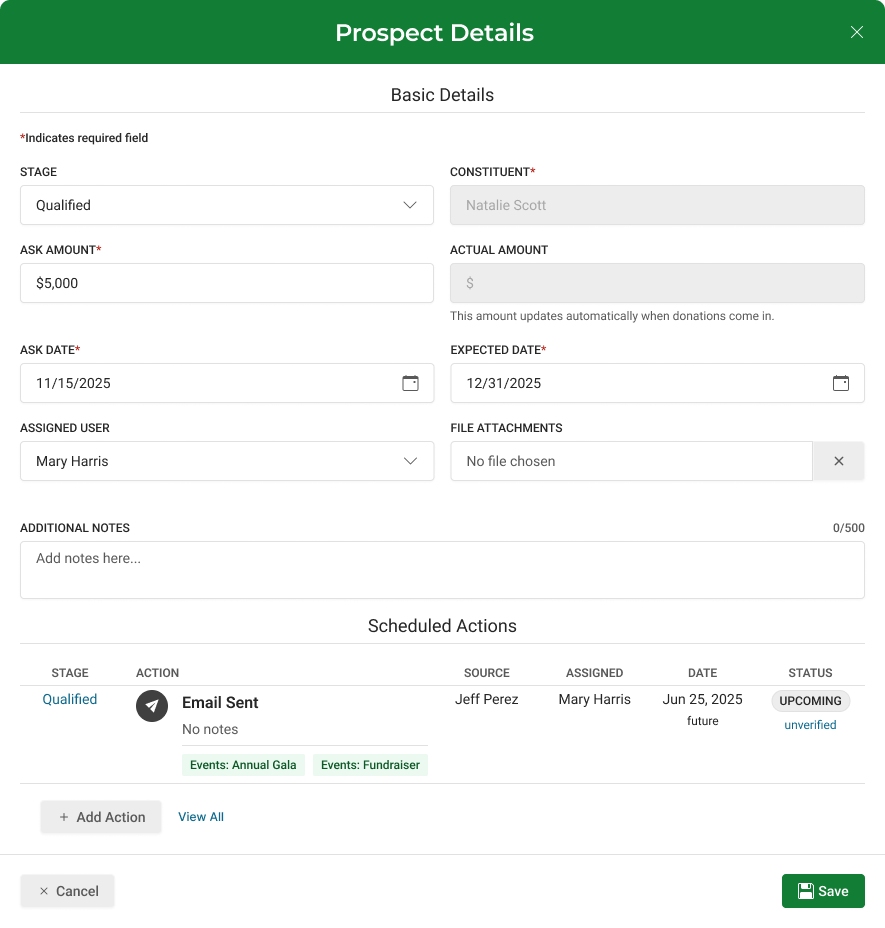
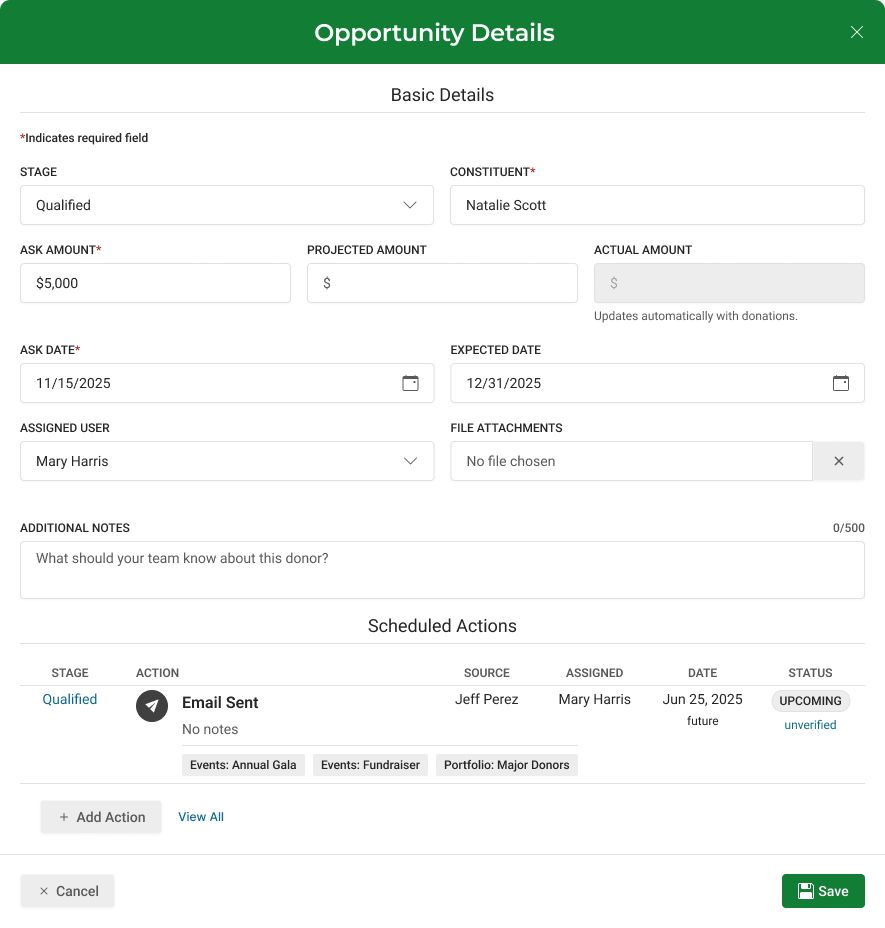
Users highlighted a distinction the design needed to support: what they ask for may differ from what they expect. And neither is necessarily what they receive.
| Value | What it represents | How it is managed |
|---|---|---|
| Ask Amount | The amount requested from the prospect | Entered by the user |
| Projected Amount | The amount the fundraiser expects to receive. | Entered by the user |
| Actual Amount | The donation recorded as received | Updated through a Donation Action, rather than edited directly on the opportunity |
The iteration added Projected Amount alongside Ask Amount, while keeping Actual Amount read-only and tied to recorded donations.
This allowed fundraisers to express their expectations while keeping recorded donations distinct from forecasts.
Select either image to view it at full size.
From Individual Opportunities to Pipeline Visibility
The solution connected three parts of the fundraising workflow.
- Pipeline summaries surfaced goals, projected amount, and raised revenue.
- Opportunity management brought ownership, stage progression, and follow-up details together.
- Constituent integration kept opportunities connected to donor history and related actions.
Together, these capabilities gave users a way to manage fundraising opportunities within Humanitru.

What Shipped and What I Learned
Opportunities introduced native fundraising pipeline management to Humanitru. It was my first major end-to-end product launch at the company, requiring collaboration across customer needs, business priorities, and technical constraints.
A key lesson was that similar-looking fields can represent very different responsibilities. Ask, Projected, and Actual Amounts needed distinct meanings and editing rules. Not simply different labels.
The broader goal was to reduce fragmented workflows and improve pipeline visibility. Post-launch evidence would be needed to quantify those benefits.